patryk.one.pl
Updated:
2020-07-09 11:12:04 UTC (1976 days ago)
Go to most recent »
Notices
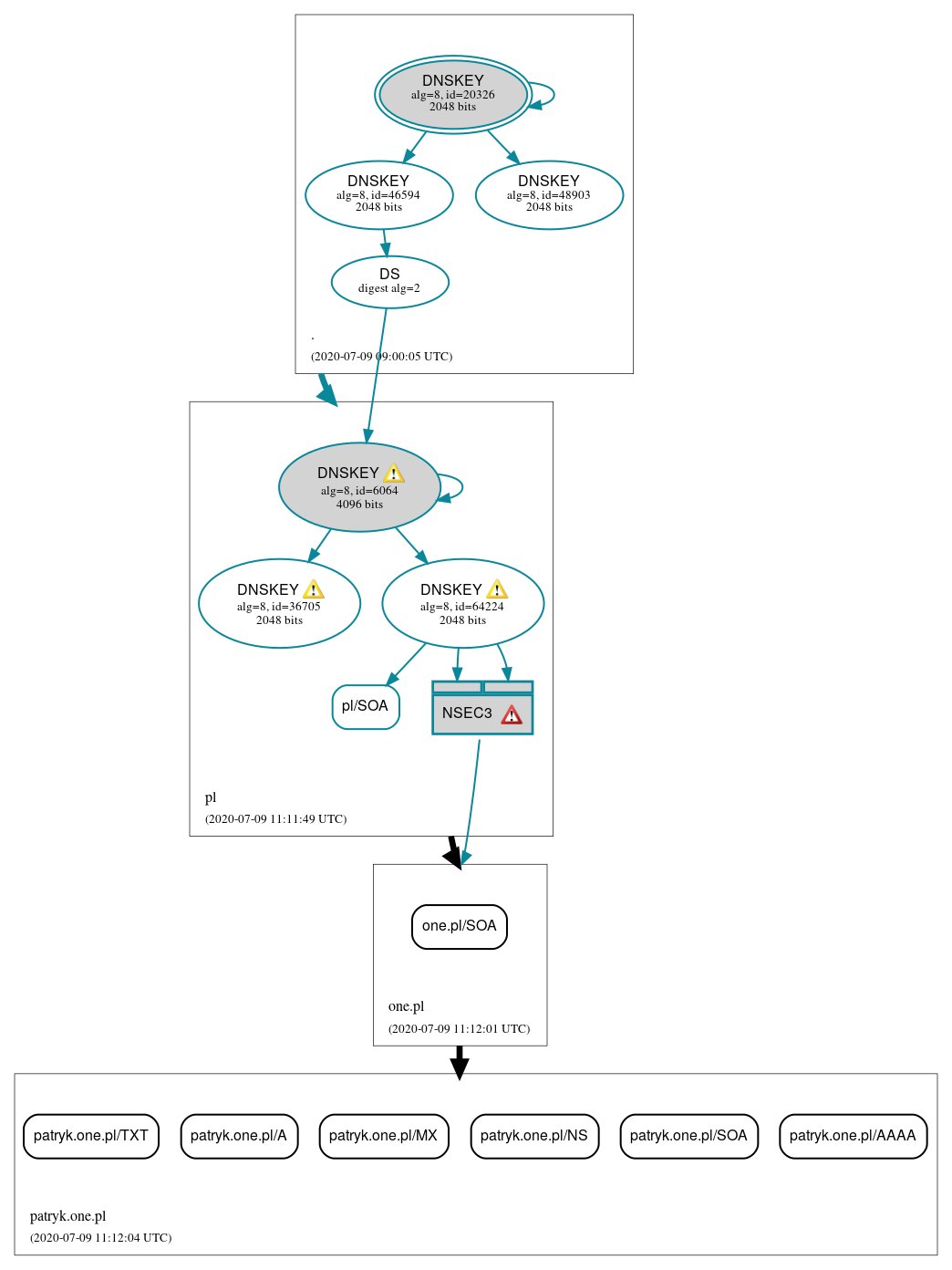
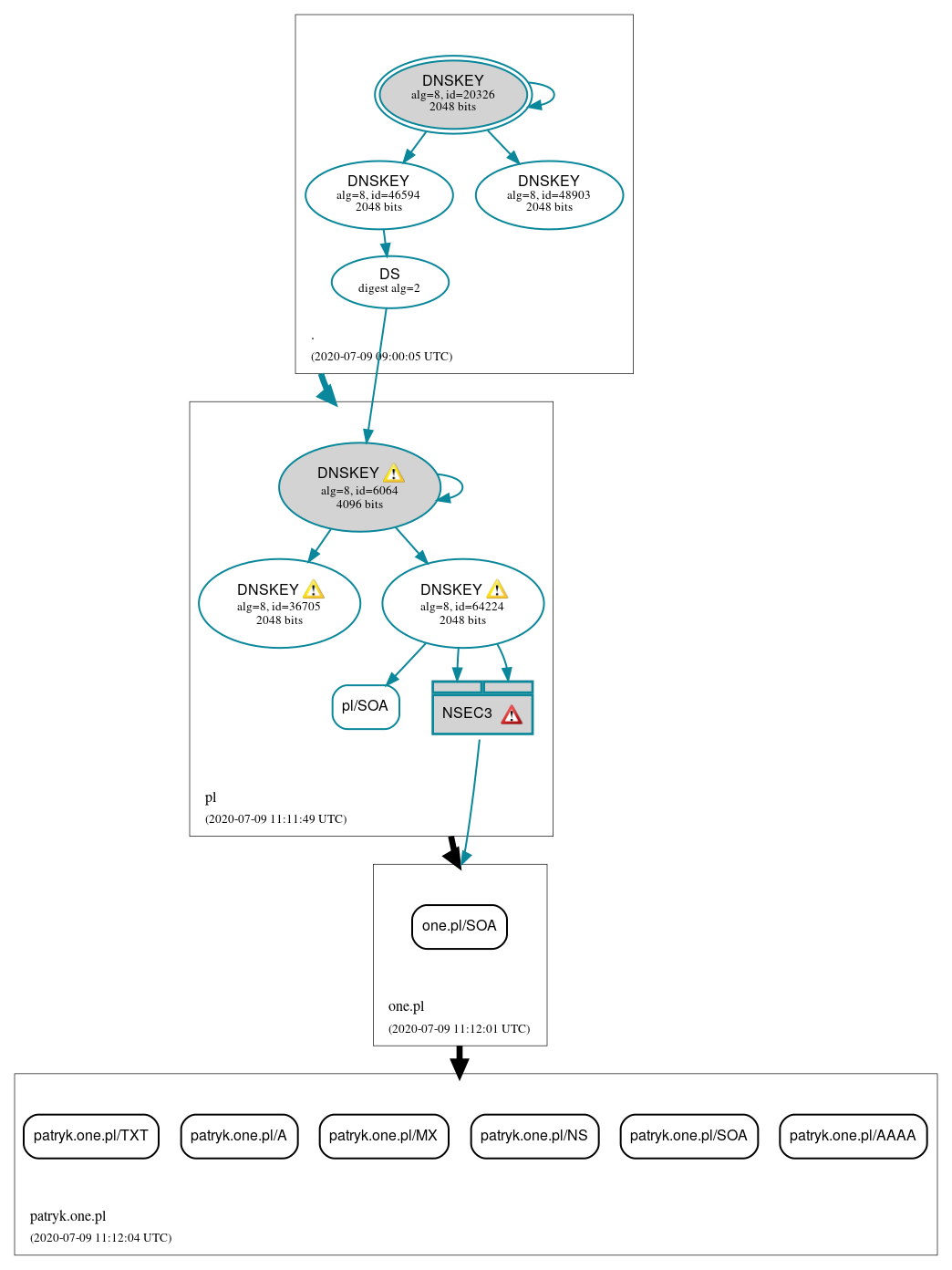
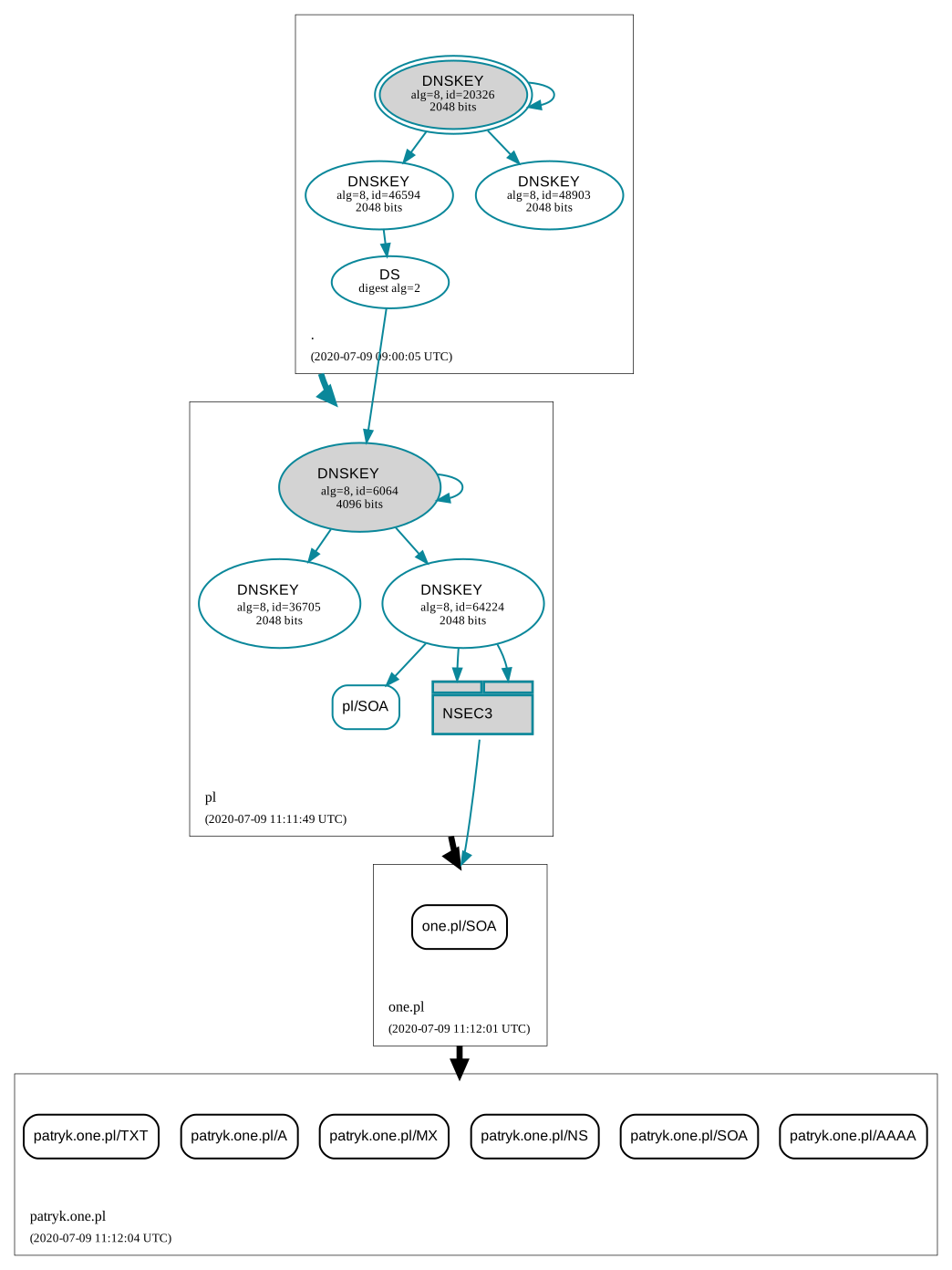
DNSSEC Authentication Chain
 RRset status
Insecure (7)
- one.pl/SOA
- patryk.one.pl/A
- patryk.one.pl/AAAA
- patryk.one.pl/MX
- patryk.one.pl/NS
- patryk.one.pl/SOA
- patryk.one.pl/TXT
Secure (1)
- pl/SOA
 DNSKEY/DS/NSEC status
Secure (8)
- ./DNSKEY (alg 8, id 20326)
- ./DNSKEY (alg 8, id 46594)
- ./DNSKEY (alg 8, id 48903)
- NSEC3 proving non-existence of one.pl/DS
- pl/DNSKEY (alg 8, id 36705)
- pl/DNSKEY (alg 8, id 6064)
- pl/DNSKEY (alg 8, id 64224)
- pl/DS (alg 8, id 6064)
 Delegation status
Insecure (2)
- one.pl to patryk.one.pl
- pl to one.pl
Secure (1)
- . to pl
 Notices
Errors (2)
- NSEC3 proving non-existence of one.pl/DS: An iterations count of 0 must be used in NSEC3 records to alleviate computational burdens. See RFC 9276, Sec. 3.1.
- NSEC3 proving non-existence of one.pl/DS: An iterations count of 0 must be used in NSEC3 records to alleviate computational burdens. See RFC 9276, Sec. 3.1.
Warnings (5)
- NSEC3 proving non-existence of one.pl/DS: The salt value for an NSEC3 record should be empty. See RFC 9276, Sec. 3.1.
- NSEC3 proving non-existence of one.pl/DS: The salt value for an NSEC3 record should be empty. See RFC 9276, Sec. 3.1.
- pl/DNSKEY (alg 8, id 36705): No response was received until the UDP payload size was decreased, indicating that the server might be attempting to send a payload that exceeds the path maximum transmission unit (PMTU) size. See RFC 6891, Sec. 6.2.6. (2001:6d8:1001:1::252, UDP_-_EDNS0_4096_D_K)
- pl/DNSKEY (alg 8, id 6064): No response was received until the UDP payload size was decreased, indicating that the server might be attempting to send a payload that exceeds the path maximum transmission unit (PMTU) size. See RFC 6891, Sec. 6.2.6. (2001:6d8:1001:1::252, UDP_-_EDNS0_4096_D_K)
- pl/DNSKEY (alg 8, id 64224): No response was received until the UDP payload size was decreased, indicating that the server might be attempting to send a payload that exceeds the path maximum transmission unit (PMTU) size. See RFC 6891, Sec. 6.2.6. (2001:6d8:1001:1::252, UDP_-_EDNS0_4096_D_K)


 JavaScript is required to make the graph below interactive.